GPT-6 and Intelligent UI: when a ChatGPT answer becomes a screen
GPT-6 brought Intelligent UI to ChatGPT: charts, buttons and forms inside the answer. What this changes for the people who make and commission brand films.
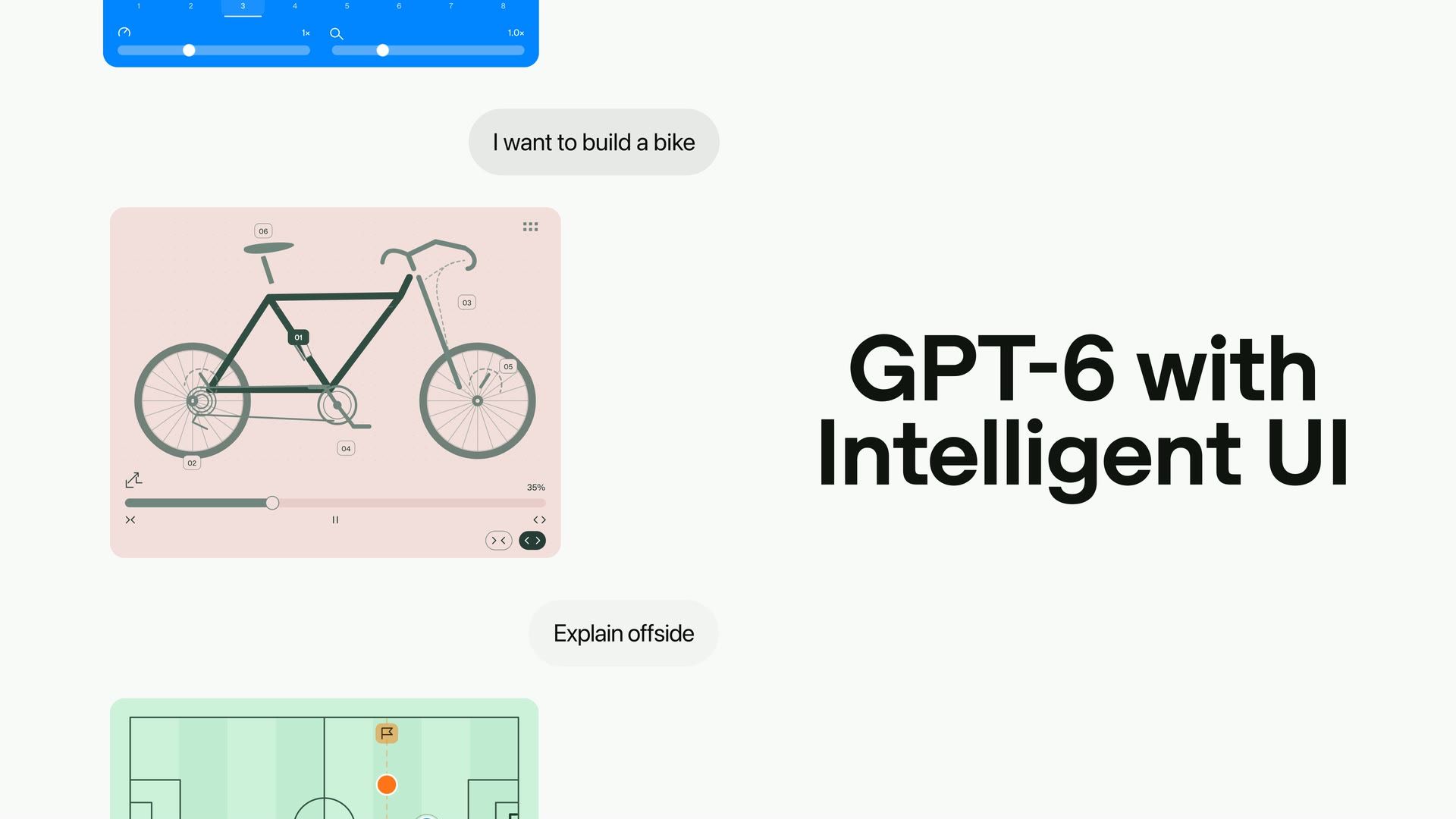
Since its launch, ChatGPT has almost always answered the same way: a block of text. On October 7, 2026, OpenAI changed that. With GPT-6, an answer can arrive as a small screen, with a chart, button, form or map, that people use right there, inside the conversation.
The company calls the feature Intelligent UI. For anyone working with brands, it changes something important: the place where the public finds product information now builds its own layout.
What OpenAI launched
According to the official announcement, GPT-6 was trained to compose answers from text, visuals and interactive elements, and to choose the mix based on the question. A comparison can appear side by side. An explanation can become a diagram people can play with. When plain text works best, it answers in text.
The company’s own examples:
- Everyday plans: prep times for a Sunday roast next to the recipe, or the stops of a road trip on a map.
- Learning a topic: diagrams where you change a value and see the result, such as an explanation of GDP.
- A tool on the spot: a savings calculator, a dinner bill splitter, a retro game.
Behind it, OpenAI says it built a library of native components and a compiler that assembles the interface while the model writes. The screen appears progressively, without waiting for the full answer.
GPT-6 can also start answering while it is still reasoning. The company says that, for questions that need web search, GPT-6 Instant starts answering on average 44% sooner than GPT-5.6 Instant. That is the maker’s figure, from an internal test, with no independent verification so far.
Who gets it, and with which model
The rollout began on October 7 in the Chat tab for Plus, Pro, Business and Enterprise plans, and reached Free and Go plans starting October 8. Paid plans use GPT-6 Sol; Free and Go use GPT-6 Luna. The official notes say the Pro reasoning option stays on GPT-6 Astra and does not support Intelligent UI.
Scale is what matters. OpenAI says ChatGPT has more than 1.2 billion weekly users. TechCrunch, which attended the press briefing, noted that people can reduce the number of visuals, as with ChatGPT’s other personality settings. 9to5Mac highlighted the buttons, forms and charts inside the answer.
Two updates followed:
- October 26, GPT-6.1 Terra. A faster, cheaper model, but for ChatGPT Work, Codex and the API, not for Chat. Among the uses OpenAI lists are drafting proposals and editing videos. In the API, the company says it costs 50% less than GPT-6.1 Sol.
- October 29, a change in tone. GPT-6 in Chat now gives more concise answers with less overly flattering language. According to OpenAI’s notes, this applies to Free, Go and logged-out users; on Plus and Pro, the main model is unchanged.
What this changes for brand content
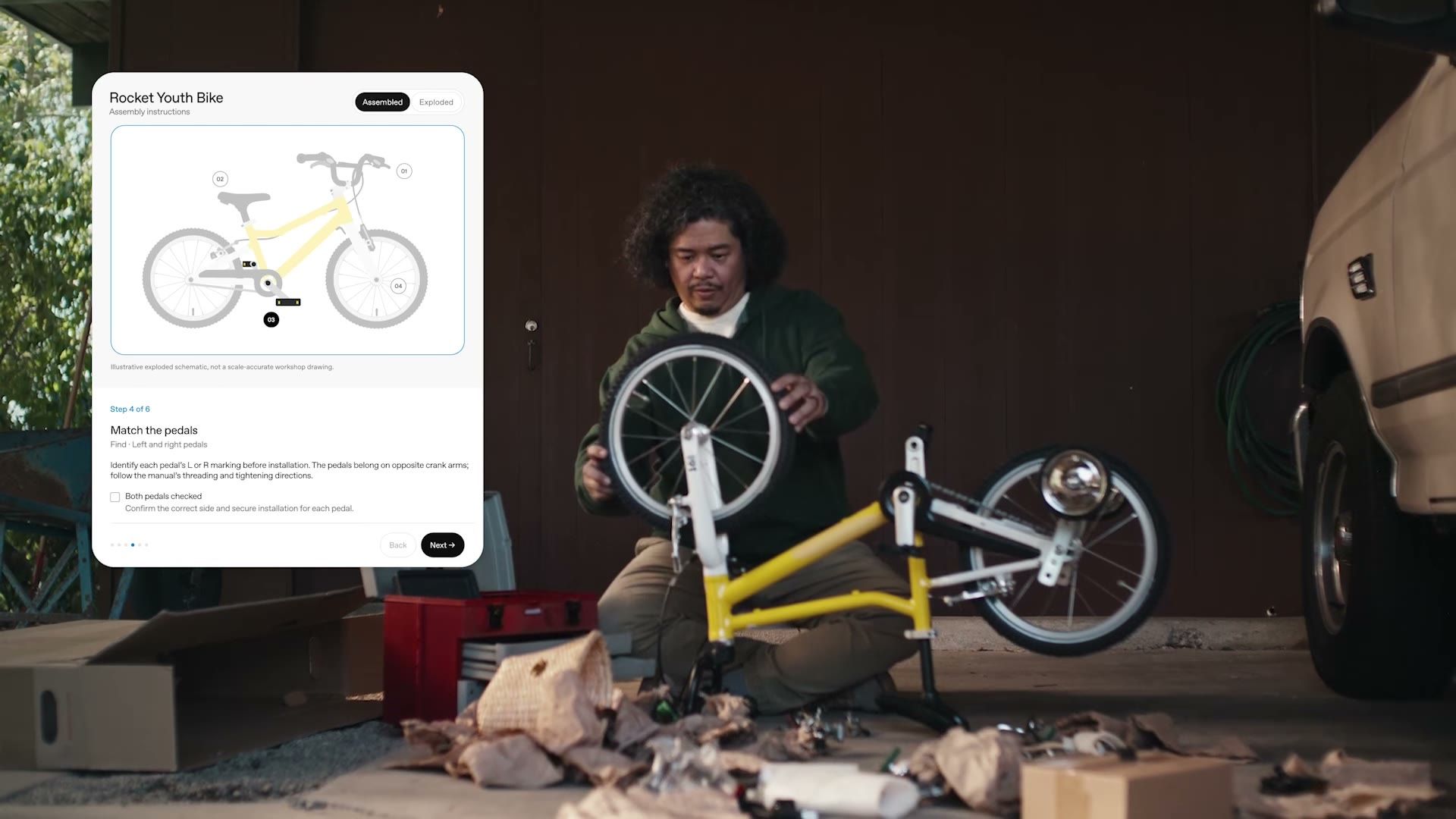
Until now, when someone asked ChatGPT about a product, they got a paragraph. Now they may get a comparison table, a step-by-step guide with checkboxes or a calculator. The model decides the format, not the brand.
That has three practical effects for people who make and commission campaigns.
1. Every brand appears in the same design. The component library belongs to OpenAI. On the ChatGPT screen, one brand’s product and its competitor’s get the same card, the same font, the same button. Visual identity is left out. What remains to set a brand apart is information: clear, consistent, easy-to-find data.
2. What a brand publishes becomes raw material for interfaces. Specs, prices, sizes, how to use it: if this is scattered or contradictory, the table ChatGPT builds will inherit the problem. Organizing a brand’s factual content is now also about how it shows up on these screens.
3. Film gets a sharper role. The interface handles the functional part well: comparing, calculating, assembling. It does not create desire, memory or tone of voice. That part is still the work of film, photography and direction.
The proof is in the launch itself
The most revealing detail is the official video. To present an interface feature, OpenAI did not show only screens. It made a 70-second film with people on camera: a man assembling a kids’ bike in his garage, a woman folding origami, someone walking down a staircase with a map on the phone. The interface comes in as an overlay, serving the scene.
The line that closes the film sums it up: “Sometimes words aren’t enough.” It applies to OpenAI too: to sell a screen, it needed a brand film.
The interface explains the product. The film makes someone want it.
In practice, for people who commission work
- Review what is factual. Ask the team for an inventory of what the brand publishes about its products and services. Conflicting data becomes a wrong table.
- Test your audience’s questions. Ask ChatGPT what a customer would ask and see how the brand shows up. It is a free diagnosis.
- Use the tool for pre-production, carefully. A budget comparison or an interactive schedule helps the conversation with a client. But what the model builds is approximate: budget figures are checked at the source.
- Don’t swap the film for the screen. Intelligent UI informs. A campaign still has to move people.
This blog’s point of view
GPT-6 with Intelligent UI goes in the same direction as Anthropic’s Claude Duet: AI takes on more and more execution, whether it is an agent that gets tasks done ahead of time or an answer that assembles itself into a screen. In both cases, judgment stays with people.
For brands, the consequence is twofold. The informational side of communication will increasingly be rebuilt by machines, in their design. The side that builds a bond becomes more valuable, and that is where an AI brand film comes in: with human direction, declared AI and an idea no component library generates on its own.
Sources
- OpenAI · GPT-6 and Intelligent UI for everyone (10/7/2026)
- OpenAI · Introducing GPT-6.1 Terra (10/26/2026)
- OpenAI Help Center · ChatGPT release notes
- OpenAI Help Center · Model release notes (10/29/2026 update)
- TechCrunch · ChatGPT is getting a lot more visual, with the launch of a new interface (10/7/2026)
- 9to5Mac · OpenAI brings GPT-6 to ChatGPT and debuts Intelligent UI (10/7/2026)
- OpenAI (official YouTube channel) · Introducing GPT-6 in ChatGPT with Intelligent UI (10/7/2026)